Why Are My Plant’s Leaves Turning Yellow? (And How to Fix It)
This post contains affiliate links. If you buy through them, I earn a small commission at no extra cost to you. As an Amazon Associate I earn from qualifying purchases.
Yellowing leaves are the most common “help my plant is dying” panic — and the good news is they’re usually fixable once you figure out the cause. The tricky part: overwatering, underwatering, and low light can all cause yellow leaves. Here’s how to read the clues and fix it.
Cause #1: overwatering (most common)
If lower and inner leaves are turning yellow and the soil is staying wet, overwatering is your culprit. Per the University of Maryland Extension, excess water pushes oxygen out of the soil and damages the roots, so the plant can’t take up water — which shows up as yellowing (and, ironically, sometimes wilting too).
Fix: Let the top two inches of soil dry out before watering again, make sure the pot has drainage, and never let it sit in a saucer of water. Full method: how often to water houseplants.
Cause #2: underwatering
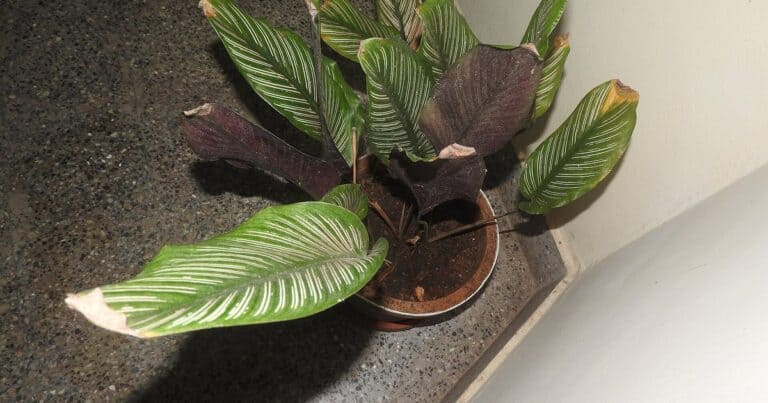
Yellowing plus crispy brown edges, dry soil pulling away from the pot, and a droopy plant that perks up after watering? That’s thirst.
Fix: Water thoroughly until it drains from the bottom, and check the soil more often. If you chronically forget, a self-watering planter fixes this for you.
Cause #3: not enough light
If yellowing comes with leggy, stretched-out growth and your plant is far from a window, it’s light-starved. Leaves yellow and drop when they can’t photosynthesize enough.
Fix: Move it closer to a window or add a full-spectrum grow light. This is especially common in winter and in dim apartments.
If low light is yellowing your plant, a full-spectrum LED brings it back — run it 12–14 hours on a timer. Full setup in our grow lights 101 guide. (Keep the cord out of paw reach.)
Check price on Amazon →Other causes
- Nutrient deficiency: uniform yellowing on newer leaves can mean it’s hungry — feed with a balanced fertilizer in the growing season.
- Pests: spider mites and others cause stippled, yellowing leaves. Check leaf undersides; treat with a pet-conscious neem routine (see our neem oil guide).
- Cold drafts or heat vents: stress from temperature swings can yellow leaves. Move the plant.
- Repotting/relocation shock: a few yellow leaves after a big change is normal; give it time to adjust.
When it’s totally normal
Not every yellow leaf is a crisis. The oldest, lowest leaves naturally yellow and drop as the plant ages and redirects energy to new growth. If it’s just one or two old leaves at the bottom and the rest looks great, relax — that’s just plant life.
FAQ
Should I cut off yellow leaves?
Once a leaf is fully yellow it won’t turn green again, so you can trim it for looks. But fix the underlying cause first, or new leaves will yellow too.
Overwatered or underwatered — how do I tell?
Feel the soil. Wet soil + yellow lower leaves = overwatered. Bone-dry soil + crispy edges = underwatered.
Why are only the bottom leaves yellow?
Often normal aging — or overwatering. Check the soil moisture to tell which.
Can low light really cause yellow leaves?
Yes. Without enough light the plant can’t sustain all its leaves, so it yellows and drops them. Add light to fix it.
The bottom line
Yellow leaves = your plant asking for a change. Check the soil first (overwatering is the usual suspect), then look at light and feeding. Fix the cause, trim the spent leaves, and your plant bounces back. And remember — a couple of old bottom leaves yellowing is just normal.
More care wins: how often to water houseplants and how to boost humidity.
Sources
- University of Maryland Extension — Overwatered Indoor Plants
- University of Minnesota Extension — Watering Houseplants
Written by Mo Ruman, a self-taught plant parent who cross-checks every plant against the ASPCA database. Not a vet — when in doubt, call yours. More about Kijani Paws · Ask me about a plant. As an Amazon Associate, Kijani Paws earns from qualifying purchases; this never affects our safety info.
Get the free pet-safe plant checklist
One email when a new ASPCA-verified guide goes live. No spam, unsubscribe anytime.