Best Cat Scratching Posts to Save Your Plants (and Couch)
This post contains affiliate links. If you buy through them, I earn a small commission at no extra cost to you. As an Amazon Associate I earn from qualifying purchases.
If your cat treats your plants, your rug, and your couch like scratching pads, you don’t have a bad cat — you have a cat with no better option. Scratching is hardwired, not naughty. The fix isn’t punishment, it’s giving them a post they actually want to use. Here’s the vet-backed why, what to look for, and our top pick.
Why cats scratch (it’s not spite)
Scratching is a normal, healthy, necessary behavior. According to VCA Animal Hospitals, cats scratch to condition their claws (removing old nail husks), to get a full-body stretch, and to mark territory — both visually and with scent glands in their paws. The ASPCA is clear on the strategy: don’t try to stop scratching, redirect it to an appropriate surface. A good post is the whole game.
What makes a good post
| Feature | Why it matters |
|---|---|
| Tall enough for a full stretch | Cats want to reach up and lengthen out — short posts get ignored |
| Rock-solid base | If it wobbles, your cat won’t trust it (and goes back to the couch) |
| Sisal rope or fabric | The texture cats love to dig into; more satisfying than carpet |
| Vertical AND horizontal options | Cats have preferences — variety wins |
| Placement | Put it where they already scratch, or by a favorite napping spot |
Our top pick
For a plant-loving home, a tall sisal post with a leafy top hits different: it gives your cat a sturdy, stretch-worthy surface and doubles as decor that fits your greenery aesthetic. Tall enough for a real stretch, weighted base so it won’t tip, sisal for that satisfying dig.
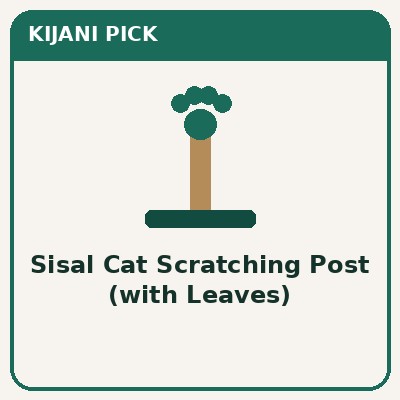
A 35-inch sisal scratcher with a faux-leaf top that blends right into a plant-filled room. Tall enough for a full stretch, stable base, and way more appealing to your cat than your couch — or your monstera pot.
Check price on Amazon →Getting your cat to actually use it
- Location, location. Place it right where they already scratch, or next to where they sleep (cats love to scratch after a nap).
- Make it the good option. Rub a little catnip on it or dangle a toy near the top to spark interest.
- Reward the right scratch. Treats and praise when they use it — positive reinforcement, never punishment.
- Make the wrong spots boring. Temporarily cover a targeted couch corner with double-sided tape or foil while the post becomes the habit.
Bonus: it protects your plants
A cat with a great scratching post — plus a tray of cat grass to chew — is a cat with much less interest in destroying your plants. Pair this with our tips on keeping cats away from plants and a cat grass setup, and your greenery finally gets to live in peace.
FAQ
How tall should a cat scratching post be?
Tall enough for a full stretch — generally at least 28–32 inches for an adult cat. Taller is better; short posts get ignored.
Sisal or carpet?
Most cats prefer sisal — it gives that satisfying resistance. Carpet can also confuse cats into thinking your actual carpet is fair game.
My cat ignores the post — why?
Usually it’s too short, too wobbly, or in the wrong spot. Move it to where they already scratch and make it rock-solid.
Is declawing a better solution?
No. Declawing is an amputation and is discouraged by major veterinary groups. A good post plus training is the humane, effective fix.
The bottom line
Cats have to scratch — so give them a tall, sturdy, sisal post they’ll actually choose over your couch and your plants. Place it smart, reward the right behavior, and add cat grass to round out the setup. Everyone wins, including your monstera pot.
More cat-and-plant harmony: best self-cleaning litter boxes and our tofu litter review.
Sources
Written by Mo Ruman. Kijani Paws researches products for pet homes; we’re not vets — for medical concerns, call yours. More about Kijani Paws · Contact. As an Amazon Associate, Kijani Paws earns from qualifying purchases; this never affects our recommendations.
Get the free pet-safe plant checklist
One email when a new ASPCA-verified guide goes live. No spam, unsubscribe anytime.