Monstera, Pothos, ZZ Plant, and Snake Plant: Bestsellers That Are Toxic to Your Pets
This post contains affiliate links. If you buy through them, I earn a small commission at no extra cost to you. This does NOT change my toxicity guidance — dangerous plants are dangerous plants. As an Amazon Associate I earn from qualifying purchases.
Here is a frustrating truth: four of the most popular, most recommended, most widely sold houseplants on Amazon are all toxic to cats and dogs. Monstera, pothos, ZZ plant, and snake plant look stunning on every home-decor blog. They also belong on every pet-owner warning list. All toxicity classifications below are sourced from the ASPCA Toxic and Non-Toxic Plants database. If your pet eats any plant and you are unsure, call ASPCA Poison Control immediately: (888) 426-4435.
1. Monstera Deliciosa — ASPCA Toxic to Cats and Dogs ⚠️
Monstera is arguably the most Instagrammed houseplant of the last decade — the big, dramatic split leaves are everywhere. The ASPCA classifies monstera as toxic to both cats and dogs. The culprit is insoluble calcium oxalate crystals embedded in the plant’s tissue. When a pet chews the leaves or stem, the crystals are released and cause intense oral irritation, burning sensation in the mouth, excessive drooling, pawing at the face, vomiting, and difficulty swallowing. Symptoms are painful but typically not fatal.
What to watch for: immediate drooling, pawing at mouth, retching, or refusing to eat after possible exposure.
If you already own a monstera, do not panic — keep it on a high shelf completely out of reach and consider a safer visual alternative. Looking for the same tropical statement piece without the toxicity? See our 15 pet-safe alternatives — the parlor palm fills a nearly identical visual role.
Product links included for those without pets or with secured plant placement: Monstera on Amazon | Costa Farms Maintain Purifying Houseplants | Philodendron Micans Hederaceum Heart Leaf. Do not purchase if your pet has free access to your plants.
2. Golden Pothos / Neon Pothos (Epipremnum aureum) — ASPCA Toxic to Cats and Dogs ⚠️
Pothos is probably the most commonly recommended beginner houseplant — and the ASPCA confirms it is toxic to both cats and dogs. Same mechanism as monstera: insoluble calcium oxalate crystals. The trailing vines make pothos especially dangerous because they hang down at nose and paw height, making it easy for a curious pet to pull a vine down and chew it.
What to watch for: oral irritation, drooling, difficulty swallowing, vomiting. The neon variety (bright chartreuse leaves) is just as toxic as the standard golden variety.
The safest pet-friendly alternative with similar trailing growth habit: spider plant. ASPCA non-toxic and produces hanging spiderettes that look stunning in a hanging basket. See our pet-safe houseplant buy guide for spider plant links.
For households without pets or with secured plant placement: Golden/Neon Pothos on Amazon | PLANTVERS Pothos Plants Grow Pots | Marble Hanging Variegated Plants Pets.
3. Black Raven ZZ Plant (Zamioculcas zamiifolia) — ASPCA Toxic to Cats and Dogs ⚠️
ZZ plants have become enormously popular as “impossible to kill” low-light plants — and they are genuinely almost indestructible. They are also ASPCA toxic to cats and dogs. ZZ plant contains calcium oxalate crystals throughout all parts of the plant — leaves, stems, and rhizomes. The Black Raven variety (jet-black foliage) is just as toxic as the standard green version.
What to watch for: oral irritation, drooling, vomiting. The rhizomes (thick underground stems) can cause more severe irritation if consumed in significant quantity.
Important note: ZZ plant toxicity was historically overstated in some sources (early claims that it caused cancer were not backed by evidence), but the ASPCA classification of toxic remains accurate — the calcium oxalate crystals cause real irritation and distress.
For households without pets or with secured plant placement: ZZ Plant on Amazon | Calathea Stella Variegated Prayer Cathedral | Black Goldfish 6 California Tropicals.
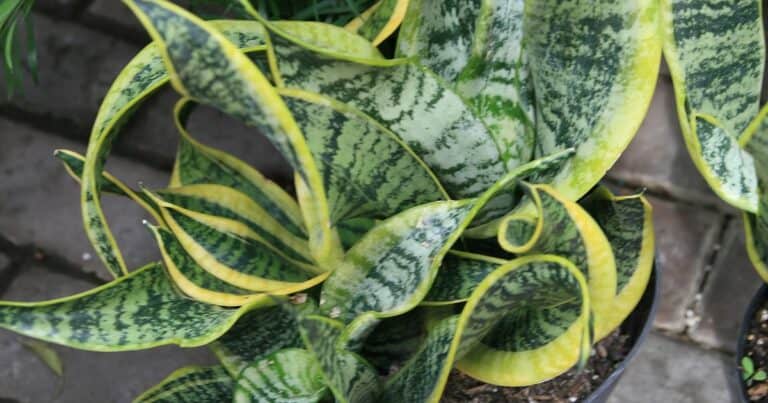
4. Snake Plant / Mother-in-Law’s Tongue (Sansevieria / Dracaena) — ASPCA Toxic to Cats and Dogs ⚠️
Snake plants are everywhere — offices, apartments, every “low-maintenance plant for beginners” list online. The ASPCA classifies snake plant as toxic to cats and dogs. The active compounds are saponins, which cause nausea, vomiting, and diarrhea when ingested. Snake plant toxicity is generally considered mild to moderate — less severe than monstera or pothos — but “mild” still means a sick pet and a vet bill.
What to watch for: vomiting, diarrhea, drooling, lethargy after exposure. The vertical, structural leaves are less likely to tempt a chewing cat than trailing vines, but curious dogs may still go for the base.
Parlor palm provides similar structural, architectural presence and is ASPCA confirmed non-toxic. See our full pet-safe plant guide for alternatives.
For households without pets or with secured plant placement: Snake Plant on Amazon | Sansevieria trifasciata Superba Plants | Costa Farms Clean Collection Assorted.
If Your Pet Eats One of These Plants
Do not wait to see how bad symptoms get. Call ASPCA Poison Control: (888) 426-4435 or your veterinarian immediately. Have the plant name (including botanical name if possible), your pet’s weight, and an estimate of how much was consumed ready when you call. We have a full guide: what to do if your pet eats a toxic plant.
What to Buy Instead
All four of these plants have pet-safe alternatives that fill the same aesthetic role. Parlor palm replaces monstera. Spider plant replaces pothos. Calathea and Boston fern give you dramatic foliage without the toxicity risk. See: 4 ASPCA-verified pet-safe plants you can buy on Amazon right now.
Frequently Asked Questions
Is monstera toxic to cats?
Yes. The ASPCA classifies monstera (Monstera deliciosa) as toxic to cats. The plant contains insoluble calcium oxalate crystals that cause oral pain, drooling, vomiting, and difficulty swallowing when chewed. If your cat ate monstera, call ASPCA Poison Control: (888) 426-4435.
Is pothos safe for dogs?
No. The ASPCA classifies pothos (Epipremnum aureum) as toxic to dogs. Symptoms include oral irritation, excessive drooling, and vomiting. The trailing vines are especially tempting for dogs to chew.
Are there houseplants that look like monstera but are pet-safe?
Parlor palm (Chamaedorea elegans) provides the same large, tropical presence as monstera without any toxicity risk. It is ASPCA confirmed non-toxic to cats and dogs. Bird-of-paradise (Strelitzia) is another large tropical option that is non-toxic, though larger and harder to find online.
My pet ate a leaf. How much is dangerous?
This varies by plant, pet size, and what part was eaten. Do not try to calculate thresholds yourself — call ASPCA Poison Control (888) 426-4435 or your vet. They will assess based on your pet’s weight and symptoms.
The simplest rule: if it trended on plant TikTok in the last five years, double-check it against the ASPCA database before buying. The most popular plants often are not the safest ones.
Get the free pet-safe plant checklist
One email when a new ASPCA-verified guide goes live. No spam, unsubscribe anytime.