5 Trendy Apartment Plants That Are Toxic to Cats
This post contains affiliate links. If you buy through them, I earn a small commission at no extra cost to you. As an Amazon Associate I earn from qualifying purchases.
Open any apartment-tour on your FYP and you’ll see the same five plants. They’re everywhere for a reason — they look incredible. Plot twist: all five are toxic to cats. If you’ve got a curious kitty, here’s what to know about each, plus the safe swaps that keep the exact same vibe.
1. Monstera (Swiss cheese plant)
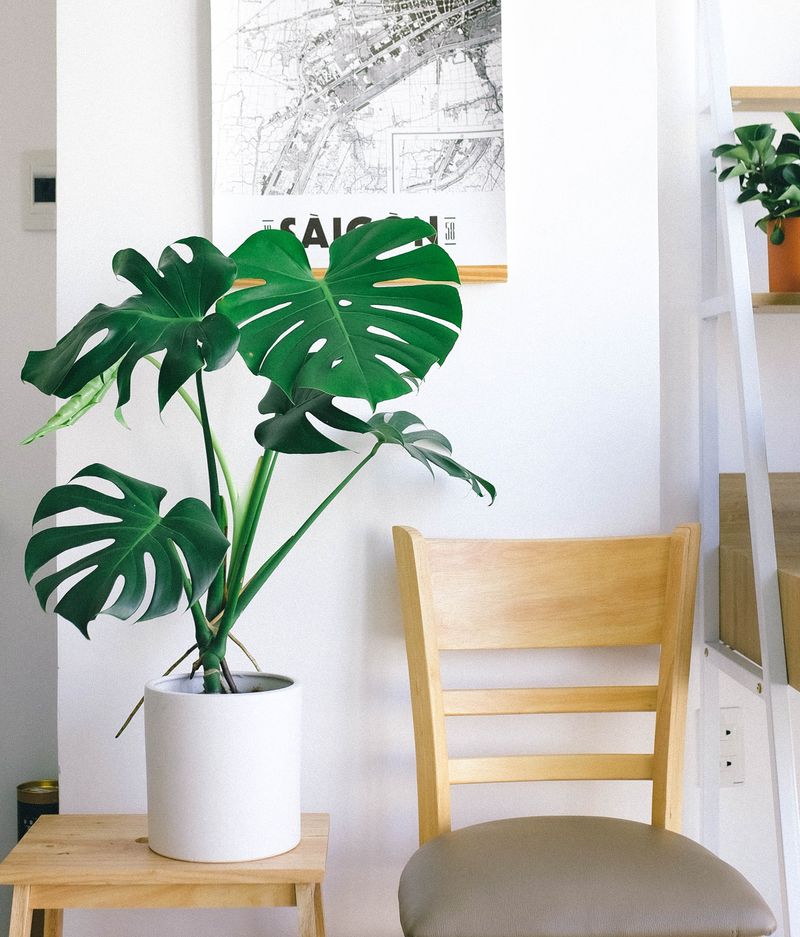
The main character of apartment plants. Unfortunately the ASPCA lists monstera as toxic to cats and dogs. It’s loaded with insoluble calcium oxalate crystals that cause mouth burning, drooling, and vomiting. More detail: is monstera toxic to cats and dogs?
2. Pothos (devil’s ivy)
The trailing-off-the-shelf classic. Also toxic — the ASPCA lists golden pothos as toxic to cats and dogs, same calcium-oxalate deal as monstera. Full write-up: is golden pothos toxic to cats and dogs?
3. Snake plant
The “impossible to kill” starter plant. The ASPCA lists the snake plant as toxic to cats and dogs — it contains saponins that cause nausea, vomiting, and diarrhea if chewed.
4. ZZ plant
Glossy, low-effort, everywhere. And toxic — the ZZ plant carries the same calcium oxalate crystals as monstera and pothos. It’s usually mild, but still causes drooling and vomiting. Details: is the ZZ plant toxic to cats and dogs?
5. Fiddle leaf fig
The influencer tree. The ASPCA lists the fiddle leaf fig (Ficus lyrata) as toxic to cats and dogs. Its sap has insoluble calcium oxalates that irritate the mouth and gut, plus it can bother skin. Mildly toxic, but genuinely uncomfortable.
The safe swaps
You can keep every one of these looks — just with a pet-safe plant instead:
| You wanted… | Safe swap |
|---|---|
| Monstera / fiddle leaf (big tropical statement) | Parlor palm or areca palm |
| Pothos (trailing vines) | Spider plant |
| Snake plant / ZZ (low-light, low-effort) | Parlor palm |
Want the trailing pothos look without the toxicity? Spider plant is the move: fast-growing, dangly, and ASPCA non-toxic to cats and dogs. Shelf it or hang it, no stress.
Check price on Amazon →FAQ
Are these plants deadly to cats?
Mostly no — monstera, pothos, snake plant, ZZ, and fiddle leaf are all classified as mildly toxic and rarely fatal. But they cause real pain (drooling, mouth burning, vomiting). Lilies are the truly deadly ones — see our lilies and cats guide.
What if my cat only licks the leaf?
Less risky than a full bite (the crystals release when chewed), but don’t count on licking being safe — cats are sensitive.
Can I keep these if they’re up high?
Yes, if truly out of reach — high shelves, hanging, or a pet-free room. But determined cats climb, and dropped leaves are still irritating, so swaps are the safest bet.
What should I do if my cat ate one?
Remove the plant, note what and how much, and call your vet or poison control. Full steps: my cat ate a plant — what to do.
The bottom line
The five most Instagrammable apartment plants — monstera, pothos, snake plant, ZZ, and fiddle leaf fig — are all toxic to cats. None are usually deadly, but all can hurt. Keep them far out of reach or swap them for a parlor palm and spider plant and keep the aesthetic and your peace of mind.
More: the full toxic houseplants list and the plants + pets safety cheat sheet.
Sources
- ASPCA — Monstera / Swiss Cheese Plant (toxic)
- ASPCA — Golden Pothos (toxic)
- ASPCA — Snake Plant (toxic)
- ASPCA — Fiddle Leaf Fig (toxic)
Written by Mo Ruman, a self-taught plant parent who cross-checks every plant against the ASPCA database. Not a vet — when in doubt, call yours. More about Kijani Paws · Ask me about a plant. As an Amazon Associate, Kijani Paws earns from qualifying purchases; this never affects our safety info.
Get the free pet-safe plant checklist
One email when a new ASPCA-verified guide goes live. No spam, unsubscribe anytime.