Spider Plant Care Guide: The Best Pet-Safe Hanging Plant for Beginners
This post contains affiliate links. If you buy through them, I earn a small commission at no extra cost to you. As an Amazon Associate I earn from qualifying purchases.
The spider plant is the most pet-friendly houseplant you can own. The ASPCA confirms it is non-toxic to cats and dogs. It is nearly impossible to kill, grows fast, looks incredible in a hanging basket, and produces trailing babies called spiderettes that you can propagate endlessly for free. If you are a new plant parent with pets, this is where to start.
This guide covers everything: light, water, humidity, propagation, and why your cat is probably already eyeing it.
Is Spider Plant Safe for Cats and Dogs?
Yes — the ASPCA confirms spider plant (Chlorophytum comosum) is non-toxic to cats and dogs. This is one of the most definitively safe houseplants available. Some cats are attracted to chewing the spiderettes — likely because the plant contains compounds that produce a mild catnip-like effect. Ingesting small amounts may cause very mild stomach upset, but this is not dangerous. If your cat eats a large quantity and seems distressed, call your vet or ASPCA Poison Control: (888) 426-4435.
Where to Buy Spider Plant on Amazon
Spider plants are widely available on Amazon year-round from reputable nurseries. Multiple size and pot options available:
Order in mild weather when possible — spring and early fall are ideal. Summer heat and winter cold can stress plants during shipping.
Light Requirements
Spider plants thrive in bright to medium indirect light. Direct afternoon sun will scorch the leaves and cause brown tips. A north-facing window or a spot a few feet back from an east or west window is ideal. They tolerate lower light better than most plants — they will survive near-shade, though growth slows significantly.
If your space is dark: A full-spectrum LED grow light is the single biggest improvement you can make. Spider plants respond noticeably to supplemental light — more growth, more spiderette production, deeper green color. Full-spectrum grow lights on Amazon | Aokrean Spectrum Adjustable Spectrums Brightness | LPMZMBL Lights Spectrum Growing Timer.
Watering
Water thoroughly when the top inch of soil is dry — typically every 1–2 weeks depending on pot size, light, and season. Spider plants are drought-tolerant and recover well from underwatering. Overwatering is a much bigger risk: soggy soil causes root rot, which is the number-one killer of spider plants.
Brown tips — the most common complaint — are usually caused by one of three things: fluoride or chlorine in tap water, inconsistent watering, or very low humidity. Switch to filtered or distilled water if brown tips are a problem.
Self-watering planters are excellent for spider plants — they prevent both overwatering and underwatering by letting roots drink from a reservoir. Self-watering ceramic planters on Amazon (see our full self-watering planter review).
Humidity
Spider plants prefer average to higher humidity (40–60%) but tolerate normal household air well. In very dry climates or during winter heating season, a humidifier or pebble tray helps maintain leaf health and reduces brown tip formation. Plant humidifiers on Amazon | Humidifiers Humidifier Ultrasonic Filterless.
Propagating Spiderettes (the Best Part)
Once your spider plant matures (usually after 6–12 months), it will produce long arching runners with baby plants (spiderettes) at the tips. These can be propagated in two ways:
Water propagation: Cut the spiderette off at the runner and place it in a glass of water until roots develop (2–4 weeks), then pot in soil.
Soil propagation: Pin the spiderette (while still attached to the runner) onto moist soil in a small pot. Roots will develop in 2–3 weeks. Snip the runner once rooted.
This is free plants — indefinitely. Spider plants are genuinely one of the best value houseplants you can own.
Hanging Baskets vs. Pots
Spider plants look their best in hanging baskets or on high shelves where the spiderettes can trail down dramatically. This also puts them naturally out of easy reach for cats — though determined cats will find a way. A standard nursery pot works fine too. Whatever you choose, make sure drainage holes exist — spider plants will not tolerate standing water.
Common Problems and Fixes
| Problem | Likely Cause | Fix |
|---|---|---|
| Brown leaf tips | Fluoride/chlorine in water, low humidity | Switch to filtered water, add humidity |
| Yellow leaves | Overwatering or root rot | Let soil dry out, check roots |
| No spiderettes | Not mature enough, or too much fertilizer | Wait 6–12 months; reduce or stop fertilizing |
| Pale/washed out color | Too much direct sun | Move back from window or add a sheer curtain |
| Leggy, sparse growth | Too little light | Move to brighter spot or add grow light |
What to Grow Next
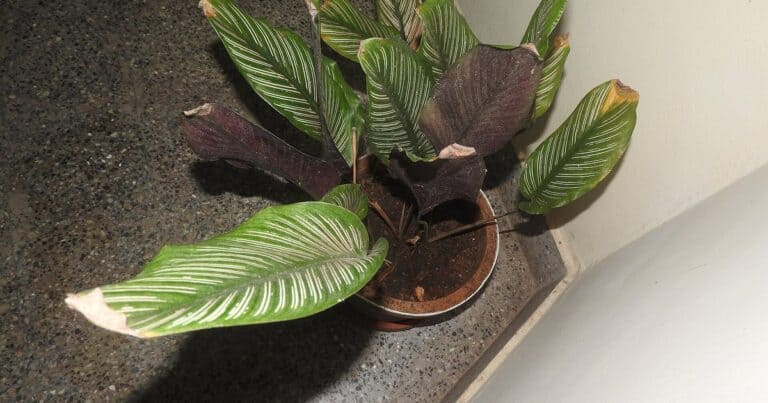
Once you have mastered the spider plant, the natural next steps are Boston fern (ASPCA non-toxic, similar care profile) and calathea (non-toxic, more challenging but stunning). Both are great additions to a pet-safe plant collection. See our Boston Fern care guide and our full list of 15 pet-safe houseplants.
Frequently Asked Questions
My cat is obsessed with eating my spider plant. Should I get rid of it?
Spider plant is ASPCA non-toxic, so nibbling is not a safety issue — just mild stomach upset at worst. If it bothers you, try hanging the plant higher out of reach. Some cats lose interest once the novelty wears off.
How fast does spider plant grow?
Fairly fast with adequate light — you can expect noticeable growth every few weeks in spring and summer. In winter or low light, growth slows significantly. They produce spiderettes most readily when slightly root-bound (a slightly too-small pot actually encourages baby production).
Can spider plants survive without direct sunlight?
Yes — they are one of the more tolerant plants for low-light conditions. They will survive near a north window, though growth will be slower. Add a grow light to maintain vigor and encourage spiderette production in darker homes.
Do spider plants clean the air?
The NASA Clean Air Study referenced in many articles found spider plants removed some indoor pollutants in controlled laboratory conditions. In a normal home, the effect is modest — you would need dozens of plants for measurable air quality improvement. Grow them because they are beautiful and pet-safe, not primarily as air purifiers.
The spider plant is the closest thing houseplant-keeping has to a sure thing. If this is your first plant with pets at home, start here.
Get the free pet-safe plant checklist
One email when a new ASPCA-verified guide goes live. No spam, unsubscribe anytime.